
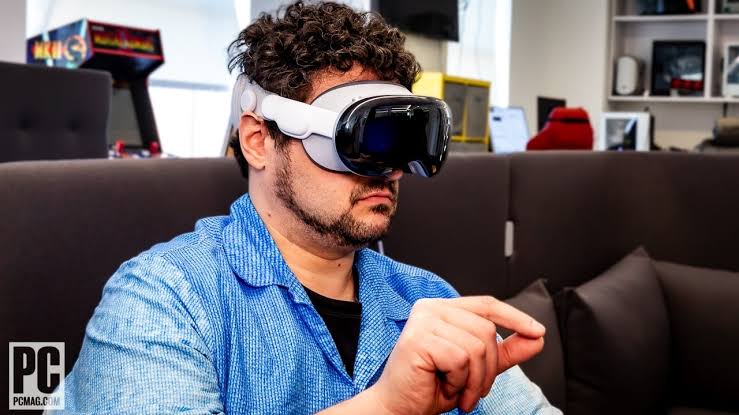

Why VR Headsets Are Trending in 2025
The world of virtual reality (VR) has moved well beyond being a niche “gamer-only” toy. In 2025, VR and mixed-reality (MR) headsets are booming — thanks to improvements in hardware, price, comfort, and wider use-cases beyond gaming.
- Mainstream adoption accelerating: The global VR/AR headset market was valued around USD 17.7 billion in 2025, and is forecast to grow rapidly over the next decade.
- Better, lighter, more immersive gear: Newer headsets use compact “pancake lenses,” high-resolution displays, and improved optics — making VR clearer, lighter, and more comfortable than earlier bulky models.
- Beyond gaming — VR for work, learning & lifestyle: VR is spreading to fields like education, virtual meetings, design, simulation, fitness, and social apps — not just games.
- Mixed Reality (MR) on the rise: Many of the newest headsets don’t just immerse you fully in VR — they also blend the real world with virtual content (MR), offering a flexible, “best of both worlds” experience.
In short: thanks to smarter design + broader uses, VR headsets in 2025 are more desirable, practical and relevant than ever before.
What’s New in 2025 — VR Headset Innovations & Trends
- Display & optics upgrades: The latest headsets deliver crisp visuals per eye (higher pixel density), reducing effects like “screen-door” lines, improving immersion and readability.
- Wireless & standalone setups: Many modern VR headsets no longer require a PC or complicated wiring. Standalone devices with Wi-Fi and built-in processing make VR more accessible and easy to use.
- Mixed Reality (MR) blending: Rather than fully escaping reality, some headsets allow mixed reality — overlaying digital elements into the real world — which opens doors for productivity, design, education, and more.
- Expanding market & lower-cost entry points: As technology advances, entry-level and mid-range headsets are becoming more affordable — lowering the barrier for many users worldwide.
- Growing content & applications beyond games: Developers are making VR content for education, socializing, fitness, creativity, training, and professional simulation — making VR more versatile.
VR Headsets Gaining Attention in 2025
Here are some of the most-discussed and recommended headsets this year, showcasing the range from accessible to premium:
Quick highlights
- Meta Quest 3 VR Headset – Widely considered a top all-around headset in 2025 thanks to crisp optics, mixed-reality support, wireless freedom, and a huge content library. Its “pancake lens” design makes earlier VR gear feel outdated.
- Meta Quest 3S VR Headset – A more budget-friendly alternative delivering many of the same benefits (standalone, wireless, versatile) — making VR more accessible for newcomers.
- HTC Vive XR Elite – A strong choice if you want a powerful mixed reality experience that blends real and virtual environments, ideal for both work and immersive media.
- Sony PlayStation VR2 – Great for console gamers who want VR without needing a PC; benefits from exclusive titles and improvements in tracking and optics.
- Valve SteamVR Headset – If you’re into high-end PC VR with wide compatibility (especially with Steam games), this headset offers powerful graphics and a premium VR environment.
- Pico 4 Ultra VR Headset – A solid mid-range standalone headset for those looking for a balance between price, performance, and VR experience.
- HP Reverb G2 VR Headset – Known for high-resolution visuals and reliability; a good pick for simulation, design, and professional VR use.
- Pimax Crystal VR Headset – Premium-level VR for enthusiasts or professionals, with top-of-the-line visuals and features, though generally pricier and more complex to set up.
What’s Next: What to Watch in VR
- More Mixed Reality & “MR + VR hybrid” headsets — Devices that let you overlay virtual content onto the real world will grow in popularity.
- Greater adoption beyond gaming — VR will keep expanding into education, collaboration, training, wellness, design, and remote work.
- Better affordability & accessibility — Prices are trending downward for capable standalone headsets, opening VR to a much larger audience globally.
- More lightweight, comfortable gear — Advances in optics, lighter materials, and ergonomic design will make VR more wearable for longer sessions.
- More content diversity — As the market grows, expect more non-gaming apps: virtual classrooms, social VR spaces, creative and productivity tools, travel simulations, etc.
Final Thoughts: Why VR Could Matter for You
If you’ve never tried VR, 2025 is one of the best years to start. The hardware is more polished and affordable than ever. For gaming, learning, creativity or simply escaping for a while — VR now offers real value.
Even if you just want the “wow” factor — high-def immersive worlds, virtual travel, interactive learning — the latest headsets deliver in ways earlier devices couldn’t.