
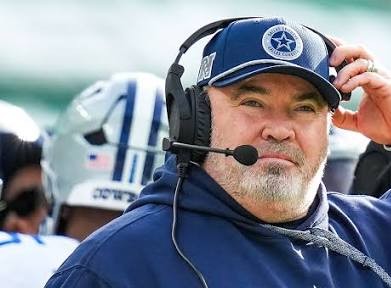

In the NFL, leadership is rarely judged by philosophy alone. It is measured in wins and losses, playoff appearances, television ratings, locker-room stability and—ultimately—return on investment. Few modern coaches illustrate this economic reality better than Mike McCarthy.
McCarthy’s résumé is, on paper, what franchises say they want: a Super Bowl championship, multiple division titles and a track record of developing elite quarterbacks. Yet his career also highlights the uncomfortable truth about NFL leadership: experience buys credibility, but only results sustain value.
Leadership As A Multi-Million-Dollar Asset
An NFL head coach is not simply a football tactician. He is the operational CEO of a billion-dollar enterprise. Decisions on play-calling, staff hiring, player development and culture ripple directly into franchise valuation. A single playoff run can generate tens of millions in additional revenue. A single disappointing season can trigger organizational resets that cost far more.
McCarthy’s tenure across Green Bay and Dallas reflects this dynamic. In Green Bay, sustained success and a Super Bowl title justified patience and continuity. Over time, however, diminishing postseason returns shifted the economic calculus. Stability gave way to the need for renewal—a common inflection point for long-tenured leaders in high-performance industries.
The Cost Of Expectations In Dallas
Nowhere are the economics of leadership more visible than with the Dallas Cowboys. The franchise operates under unmatched brand pressure, where regular-season success is table stakes and postseason advancement is the true currency.
Under McCarthy, the Cowboys have posted strong regular-season records, fielded elite offenses and remained consistently relevant. From a business standpoint, this matters. Competitive teams sustain fan engagement, sponsorships and national visibility.
But expectations in Dallas are not linear—they are exponential. The absence of deep playoff success reframes every achievement. At that level, leadership is no longer evaluated on competence but on ceilings. The question shifts from “Is this working?” to “Is this enough?”
Adaptation Versus Legacy
One of McCarthy’s most underappreciated traits is adaptability. Early in his career, he was known for a traditional offensive structure. Later, he publicly embraced analytics, modern schemes and self-scouting—an acknowledgment that leadership value depreciates without reinvention.
Yet adaptation has limits. In the NFL, timing is as valuable as innovation. Organizations often move on not because a leader has failed, but because they believe the cost of standing still outweighs the risk of change.
The Broader Lesson For NFL Leadership
McCarthy’s career underscores a broader economic reality across the league: head coaches operate in a zero-sum environment where success compounds and stagnation accelerates decline. Past championships provide leverage—but not immunity. Leadership equity must be renewed annually.
In that sense, Mike McCarthy is not an outlier. He is a case study.
The NFL is a results-driven marketplace, and leadership is its most scrutinized investment. No matter how accomplished the résumé, the clock is always running—and the stakes are always rising.